Withdrawing the Deceased's Savings and Deposits: Documents and Steps
The deceased's bank account does not automatically belong to anyone. Know the documents the bank requires, the order of debts and wills, and how to distribute the funds according to each heir's share.

Bank accounts are part of the inheritance
When a Muslim passes away, the balance of savings, deposits, and other bank accounts does not automatically belong to the children, the wife, or anyone holding the passbook. The entire balance becomes part of the inheritance (boedel), together with land, vehicles, and other property. The bank does not distribute it; the heirs do, according to Allah's provisions in the Qur'an, Surah An-Nisa 4:11, 4:12, and 4:176, as summarized in Book II of the Compilation of Islamic Law (KHI) (Articles 171–214).
The problem is that the bank does not automatically know the account holder has died. Therefore, the wise first step is to notify the bank as soon as possible, bring the death certificate, and request that the account be temporarily blocked. Avoid using the deceased's ATM card or mobile banking app after the date of death, because such transactions can create legal problems and complicate the administration later.
The correct order: debts and wills first
Before the funds are distributed, certain obligations must be fulfilled first. The order is: funeral and burial expenses, then the deceased's debts, then the will (maximum one-third of the estate), and only then is the remainder distributed to the heirs. The basis for distribution after the will and debts is mentioned in An-Nisa 4:11 and 4:12.
Debts to the bank are included. If the deceased still had outstanding credit, credit card balances, or other loans, inform the bank officer from the outset. In practice, the bank may offset those obligations against the existing balance, in accordance with the agreement and applicable provisions. Therefore, request a written breakdown of the balance and obligations before agreeing to the withdrawal.
Documents the bank usually requires
Requirements differ between banks and between types of accounts, so it is best to ask the branch where the account was opened for its official list. In general, the documents required include:
- Death certificate from the Civil Registry Office (Dinas Kependudukan dan Pencatatan Sipil).
- Original and photocopy of the Family Card (Kartu Keluarga), as well as the deceased's ID card (KTP).
- ID cards and Family Cards of the heirs.
- Passbook, ATM card, or deposit certificate (bilyet deposito), if any.
- A Certificate of Heirs (Surat Keterangan Ahli Waris), or a Determination of Heirs (Penetapan Ahli Waris) from the Religious Court for Muslim families. Some banks accept a certificate from the village office (kelurahan/desa) for certain amounts; others require a court determination.
- A statement or agreement on distribution from all heirs, sometimes requiring notarial legalization.
- A stamped power of attorney if one of the heirs is represented.
If there are heirs who are still minors, the bank usually requires a statement from a guardian or parent as accompanying party. Disclose this situation honestly to avoid an erroneous withdrawal.
Practical steps from death certificate to withdrawal
- Obtain the death certificate first; almost every process depends on this document.
- Go to the bank, bring the documents you have, and ask for the written list of requirements.
- Request that the account be temporarily blocked for safety while the documents are completed.
- Sit down with the family to calculate each heir's share, including ensuring that no heir is excluded (hijab).
- Complete the Certificate or Determination of Heirs as the bank requires.
- Carry out the withdrawal, then request that the funds be transferred to each heir's account so the trail is clear.
- Keep all transaction receipts and record them in the list of inheritance assets.
For deposits (deposito), pay attention to the maturity date. Withdrawal before maturity generally follows each bank's provisions, so ask about the consequences before deciding.
A simple example: savings of Rp240 million
Mr. Hartono passed away. He left a wife (Mrs. Sri), one son (Dani), and two daughters (Rina and Ayu). His savings balance was Rp240,000,000, with no debts and no will. The wife receives 1/8 because there are children, and the remainder is divided 2:1 between the son and the daughters.
| Heir | Basis of share | Amount |
|---|---|---|
| Mrs. Sri (wife) | 1/8 | Rp30,000,000 |
| Dani (son) | 2 parts of 4 | Rp105,000,000 |
| Rina (daughter) | 1 part of 4 | Rp52,500,000 |
| Ayu (daughter) | 1 part of 4 | Rp52,500,000 |
The total is exactly Rp240,000,000. If there turns out to be a debt of Rp12,000,000, the funds to be distributed are first reduced by the debt, and the figures above are recalculated from the remaining estate.
Common obstacles
Some situations make the process less simple than the example above. A joint account, for instance, does not always mean the entire balance is inheritance; its status depends on the type of account and the opening agreement, so it needs to be asked about at the bank and, if necessary, consulted. Heirs residing abroad usually need a power of attorney legalized in accordance with applicable provisions. If among the prospective heirs there is a non-Muslim, their position must be examined carefully because Article 171 of the KHI requires heirs to be Muslim, and in practice this often requires a court determination.
If the family has not reached agreement, the bank generally holds the withdrawal until there is a document confirming who the heirs are and what their shares are. This is not indifference on the bank's part, but protection against withdrawal by parties not entitled to it.
Next steps
Start with the easiest: obtain the death certificate, contact the bank, and gather the list of requirements. After that, compile a list of all the deceased's assets and debts, then calmly calculate each heir's share. If there is a will, complicated debts, a dispute, or non-Muslim heirs, consult the Religious Court, a notary, or a ustadz you trust. This article is general information, not a fatwa and not legal advice for a specific case.
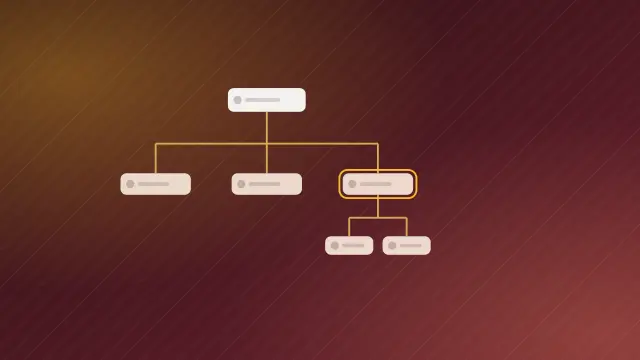
If you want a clearer picture, IndoWaris can chart your family tree and calculate each heir's share, so that the figures you bring to the bank and to the family have a clear basis.
Calculate your own family's inheritance
Build the family tree, see each heir's share under the KHI, then download the chart and PPTX — free.