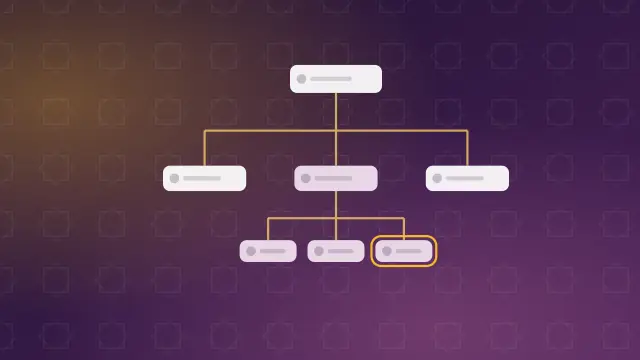
Technology and AI in Inheritance Calculations: Transparent and Easy to Verify
Inheritance calculations are often wrong not because of bad intentions, but because the rules are layered. Technology and AI can map the family tree, calculate shares, and display the details so they can be checked together with the family.

Why inheritance calculations feel complicated
In many families, conversations about inheritance begin with good intentions: wanting to divide the deceased's property fairly and in accordance with sharia. But when it comes to the numbers, the atmosphere often turns tense. Not because the family is not harmonious, but because Islamic inheritance rules are indeed layered. There are shares that are already fixed (furudh), there is a residue that must be recalculated, and there are relatives whose presence actually changes the shares of other relatives.
The Qur'an has already given clear guidelines. An-Nisa 4:11 sets the share of sons and daughters at a ratio of 2:1, the share of a single daughter at 1/2, and two or more daughters at 2/3. That verse also sets the shares of the father and mother. An-Nisa 4:12 regulates the shares of husband and wife, while An-Nisa 4:176 discusses kalalah inheritance. In Indonesia, these provisions are summarized in Book II of the Compilation of Islamic Law (KHI) (Articles 171–214).
Unfortunately, verses and articles do not automatically turn into rupiah figures. That is where technology — including AI — is increasingly used by families to assist, not replace, human judgment.
Sources of complexity that are often overlooked
- Shares change because of children. A wife receives 1/4 if there are no children, but 1/8 if there are children. A mother receives 1/3 if there are no children and no two or more siblings, but 1/6 if there are children or two or more siblings.
- Hijab or being excluded. Full siblings are excluded by the presence of a child or by the father, in accordance with religious court practice.
- Special cases. For example gharrawain, when the mother receives 1/3 of the remaining estate after the husband's or wife's share is taken.
- Substitute heirs (Article 185 KHI). A grandchild whose parent died earlier takes the parent's share, then divides it 2:1 according to gender.
- Chain inheritance (munasakhah). If an heir dies before the estate is divided, their share passes to their own heirs.
That list does not yet include joint marital property, grants, wills, and debts. It is no wonder that manual calculations on a sheet of paper are sometimes wrong in one or two places, and then the wrong number is carried into the family meeting.
What technology and AI can help with
The role of technology here is simple but significant: moving the work of calculating and recording into a consistent system. There are several things that are usually assisted:
- Mapping the lineage. Who the deceased is, who their parents are, who their children and siblings are, and who has already died earlier.
- Calculating shares. Furudh, the residue for residuary heirs (ashabah), and the 2:1 division are calculated automatically, so no step is missed.
- Displaying details. Not just the final number, but the reason for each line: what the basis of the share is, from which residue it is calculated.
- Simulation. Families can compare scenarios, for example if one heir turns out to have died earlier, without changing the original data.
- Archive. Lineage and calculation results are stored neatly as material for deliberation and document attachments.
IndoWaris, for example, can draw a family tree and calculate each heir's share based on the same rules as Book II of KHI, then display the details so they can be checked together.
Example: one family, numbers that must add up
Mr. Ahmad passed away and left behind a wife, his mother, two sons, and one daughter. After funeral costs, debts, zakat, and wills are settled, the net estate is Rp600,000,000.
| Heir | Basis of share | Share | Rupiah |
|---|---|---|---|
| Wife | 1/8 because there are children | 1/8 | 75,000,000 |
| Mother | 1/6 because there are children | 1/6 | 100,000,000 |
| First son | Residue, ratio 2:1 | 2/5 of the residue | 170,000,000 |
| Second son | Residue, ratio 2:1 | 2/5 of the residue | 170,000,000 |
| Daughter | Residue, ratio 2:1 | 1/5 of the residue | 85,000,000 |
| Total | 600,000,000 |
Note: the shares of the wife and mother are taken first (Rp175,000,000), and the remaining Rp425,000,000 is divided into five parts according to the 2:1 ratio. A common mistake is giving the mother a full 1/3, or assuming the daughter gets 1/2 because she is a "daughter", even though she is with two brothers and therefore shares in the residue. A good calculator displays the reasoning on every line, not just the final result, so mistakes like this are easy to see.
Limits of technology: what still needs humans
Technology helps with calculation, not with establishing law. Several matters still require human judgment and official documents: the status of joint marital property, the validity of grants and wills, and disputes between families. There are also situations that no tool has modeled perfectly, such as the limits of Article 185 paragraph 2 of KHI, the position of grandparents, and distant relatives.
An heir's status is also determined by facts, not by an algorithm — for example the requirement of being Muslim in Article 171, or the exclusions in Article 173 such as being proven to have killed, attempted to kill, seriously injured, or accused the deceased with an accusation punishable by five years or more. For the determination of heirs, the route is to the Religious Court; for the transfer of land rights, to a notary or PPAT; for complicated cases, ask a ustadz who understands faraid.
Checklist before using an inheritance calculator
- Make sure of the marital status and the order of deaths in the family.
- List all heirs alive at the time the deceased passed away, including those out of town or abroad.
- Settle funeral costs, debts, zakat, and wills first (maximum 1/3).
- Separate joint property from the deceased's personal property.
- Record any grants that have been given so they can be discussed within the family.
- Prepare documents: death certificate, family card (KK), marriage certificate, certificates, and account data.
- Check whether the calculation results display step-by-step details, not just the total.
Practical next steps
Start with something simple: draw the family tree, determine who the heirs are, then calculate. Once the numbers are out, bring them to a family deliberation to discuss calmly — preferably before the property is used or transferred. If the family needs legal certainty, apply for a determination of heirs at the Religious Court and consult a notary or PPAT about the transfer of assets. This article is general information, not a fatwa or legal advice.
Calculate your own family's inheritance
Build the family tree, see each heir's share under the KHI, then download the chart and PPTX — free.