Compiling a Family Tree as the Basis for Islamic Inheritance Distribution
A tidy family tree is the foundation of fair inheritance distribution. A guide to recording family data, steps to compile it, and simple examples that are easy to follow.
Why the Family Tree Must Be Compiled Before Calculating the Inheritance
In Islamic inheritance, a person's share is not determined by birth order or emotional closeness, but by who is still alive at the time the deceased (pewaris) passes away and how that person is related to the deceased. The main basis is in the Qur'an, surah An-Nisa verses 11, 12, and 176, which is then elaborated in more detail in the Compilation of Islamic Law (KHI) Book II, Articles 171 to 214.
Therefore, the first question before calculating is not how much my share is, but who exactly is in this family and who has already passed away earlier. Without a tidy family map, two mistakes often occur: assuming someone automatically receives an inheritance when in fact they are excluded, or overlooking an heir who is actually entitled.
What Data Needs to Be Recorded
A family tree for inheritance purposes differs from a hobby family tree. What is recorded is the data that genuinely affects the right to inherit:
- Full name, including the pre-marriage name for women, so that people are not confused when names are similar.
- Date of birth and date of death of each person, because the order of death determines whether chained inheritance (munasakhah) applies.
- The precise family relationship: biological child, adopted child, full sibling, paternal half-sibling, maternal half-sibling, and so on.
- Religious status, because according to KHI Article 171 letters b and c, an heir is a person who is Muslim. This is a condition for becoming an heir, not one of the impediments in Article 173.
- Marital status: which spouse of the deceased was still bound in marriage at the time of death, including if there was more than one wife.
- Events that change inheritance rights, for example divorce, change of religion, or a court ruling.
Steps to Compile a Family Tree
- Gather the basic documents: family card, birth certificate, marriage certificate, death certificate, and the certificate of heirs (surat keterangan ahli waris) if one already exists.
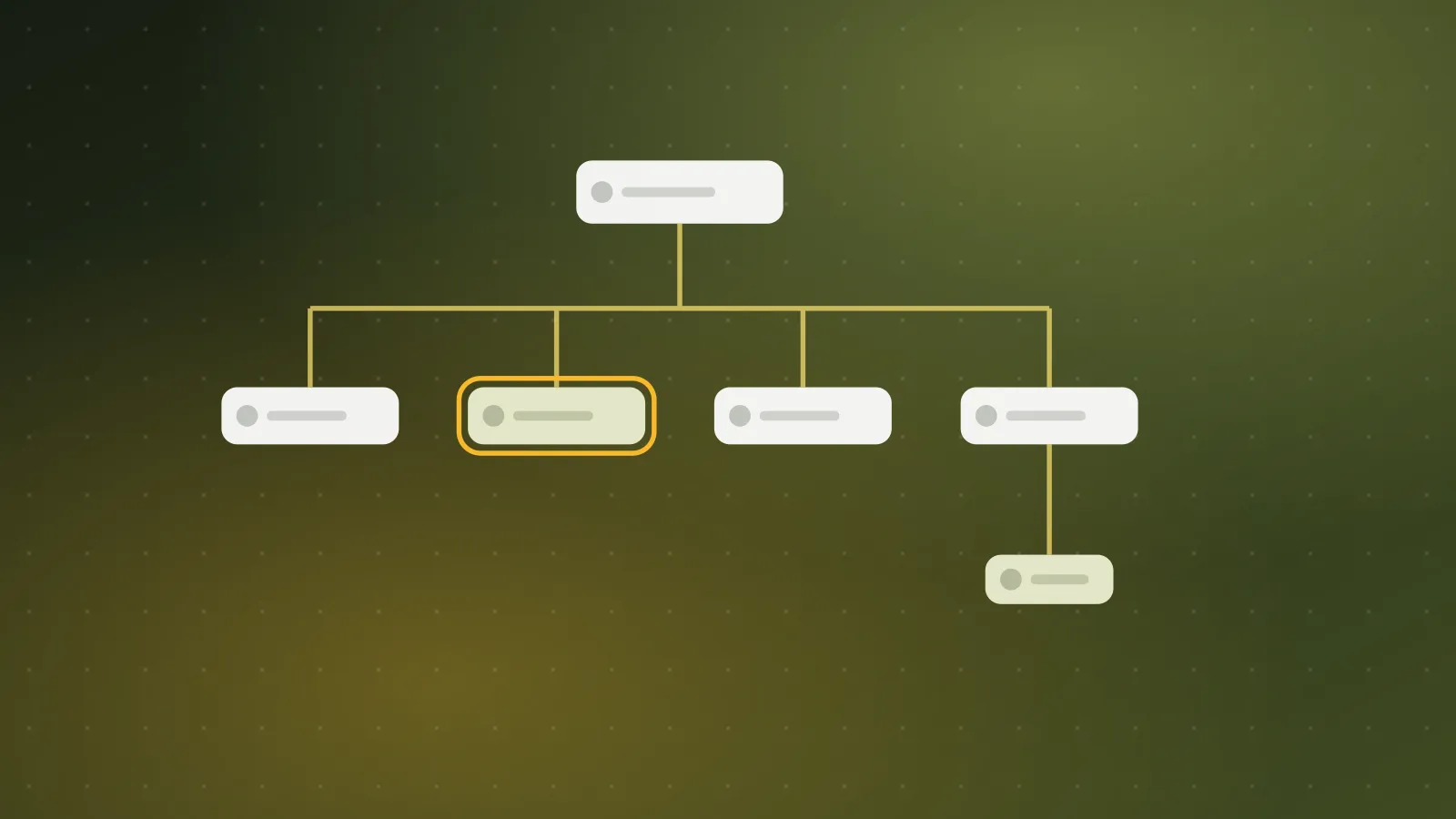
- Place the deceased's name as the axis in the center, complete with the date of death.
- Add one generation upward: the deceased's father and mother, along with their dates of death.
- Add the deceased's spouse and all their children, both those still living and those who have died.
- Mark everyone who died earlier than the deceased, and record their descendants.
- Re-check: who was actually alive at the time the deceased passed away?
- Confirm with other family members, the village office, or mosque records, because oral data often differs.
- Store it in a form that is easy to update, then update it whenever there is a marriage, birth, or death.
A Brief Example: Pak Hasan's Family
For example, Pak Hasan passed away in 2026. From the family tree it can be seen that he left Bu Sari (wife), Rian and Dedi (two sons), and Nia (one daughter). Both of Pak Hasan's parents have died, while Mas Tono, Pak Hasan's full sibling, is still alive.
From this map it is immediately clear that Mas Tono does not receive an inheritance, because according to KHI and the practice of the Religious Court, a sibling is excluded by the presence of a child. Since the heirs consist of the wife and children, the distribution is:
| Heir | Basis | Share |
|---|---|---|
| Bu Sari (wife) | An-Nisa 4:12, there is a child | 1/8 = 5/40 |
| Rian (son) | An-Nisa 4:11, 2:1 | 7/20 = 14/40 |
| Dedi (son) | An-Nisa 4:11, 2:1 | 7/20 = 14/40 |
| Nia (daughter) | An-Nisa 4:11, 2:1 | 7/40 |
The total is exactly 40/40. Note that these figures can only be calculated once the family tree has been confirmed, not the other way around.
Mistakes That Often Occur
- Recording only the male lineage, so that daughters and their descendants disappear from the map.
- Forgetting to record the second or third wife, even though the wife's share is divided jointly if there is more than one.
- Assuming an adopted child automatically becomes an heir. Such a child does not inherit by lineage (nasab), but KHI provides for the possibility of a mandatory will (wasiat wajibah) for them.
- Ignoring an heir who died after the deceased, so that their share is not passed on to their own heirs.
- Not updating the family tree after a death, so that the distribution is carried out based on old data.
Practical Next Steps
Start from the closest circle, then expand little by little. Some steps that can be done this week:
- Make a draft family tree for the deceased whose estate will be divided, at least three generations.
- Collect photocopies of supporting documents and keep them together with the draft family tree.
- Open the data to all heirs so that no one feels excluded.
- Update the record whenever there is a marriage, birth, divorce, or death.
- If there is a difference of interpretation, consult the Religious Court, a notary or PPAT, or a ustadz you trust.
IndoWaris can help draw the family tree and calculate the shares of the heirs based on the data you enter, so that you can re-check the results together with the family. This article is general information, not a fatwa and not legal advice.
Calculate your own family's inheritance
Build the family tree, see each heir's share under the KHI, then download the chart and PPTX — free.